
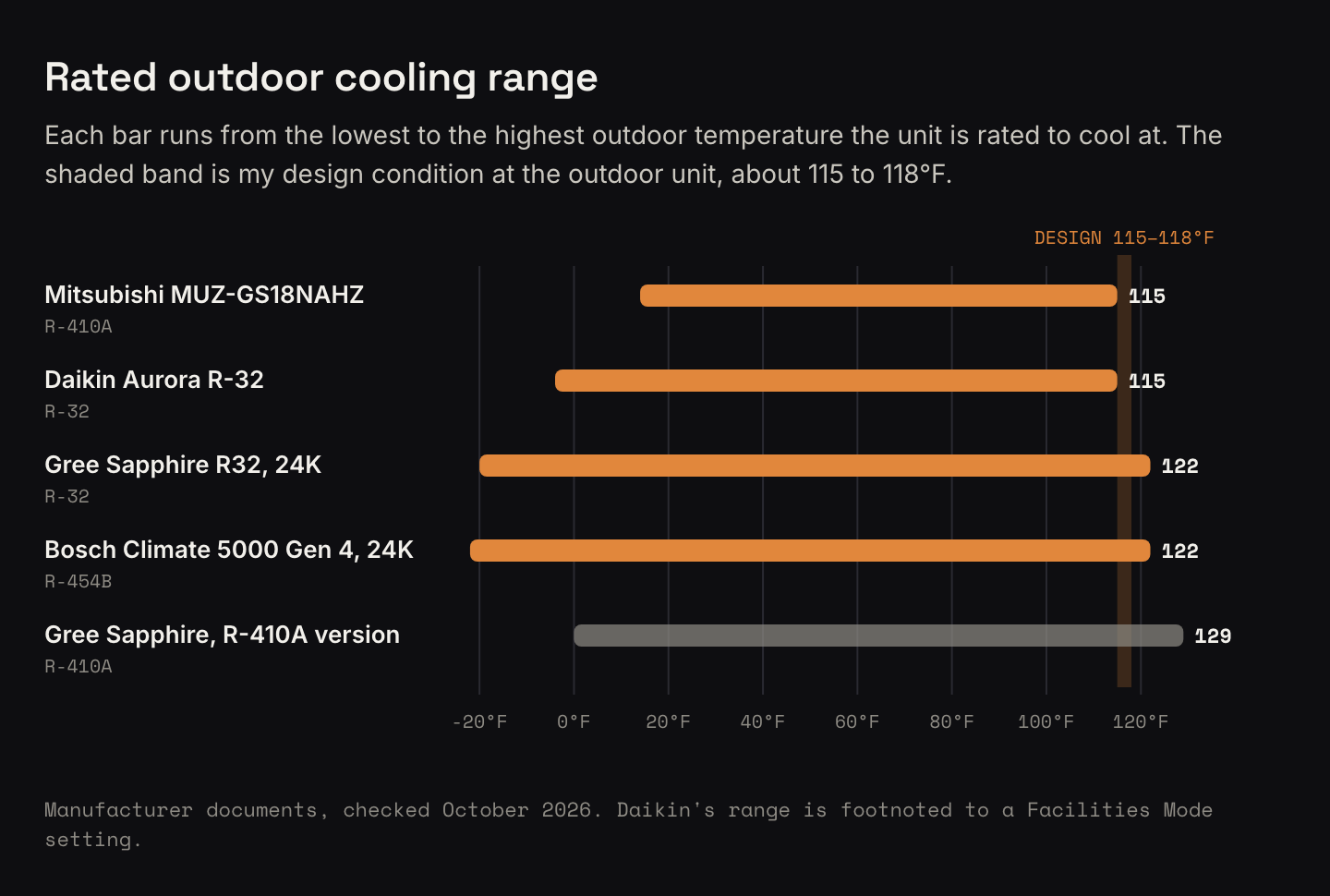
For a desert garage that hit about 119°F, the first line I read on a mini-split spec sheet was the hottest outdoor temperature the unit is rated to cool at. Two of the well-known units I checked top out at 115°F. A 129°F figure that came up early in my research turned out to belong to the older refrigerant version of one product line.
This is a research note.
My design condition was about 115 to 118°F of air at the outdoor unit.
What the spec sheets say
I checked each rating against the manufacturer's own documents, in October 2026:
- Mitsubishi Electric MSZ-GS18NA / MUZ-GS18NAHZ: cooling range 14 to 115°F, R-410A (a Mitsubishi Electric Trane submittal; the copy I checked is hosted by a retailer).
- Daikin Aurora R-32 wall-mounted: cooling range -4 to 115°F, footnoted in the brochure to a Facilities Mode setting.
- Gree Sapphire R32: cooling range -20 to 122°F.
- Bosch Climate 5000 Gen 4, 24,000 BTU Max Performance wall system: cooling range -22 to 122°F, R-454B.
- Gree Sapphire, R-410A version: cooling range 0 to 129°F.
115°F is at or below my design condition, which says something about my garage and nothing bad about those units.
Where the 129°F came from
Early on, a comparison page put one brand at 129°F, far clear of everything else. My notes picked that up and repeated it in the brand table and again in the summary, before I had checked it.
When I did, the 129°F was real, but it is the rating for the R-410A version of that line. The R-32 version is rated to 122°F. If you are shopping by name, you can easily end up comparing a rating that belongs to a different model.
Where it runs, and how much it cools
The top of the range tells you where the unit is still rated to operate. It does not tell you how much cooling it delivers there. In July my notes said no manufacturer published capacity at those temperatures.
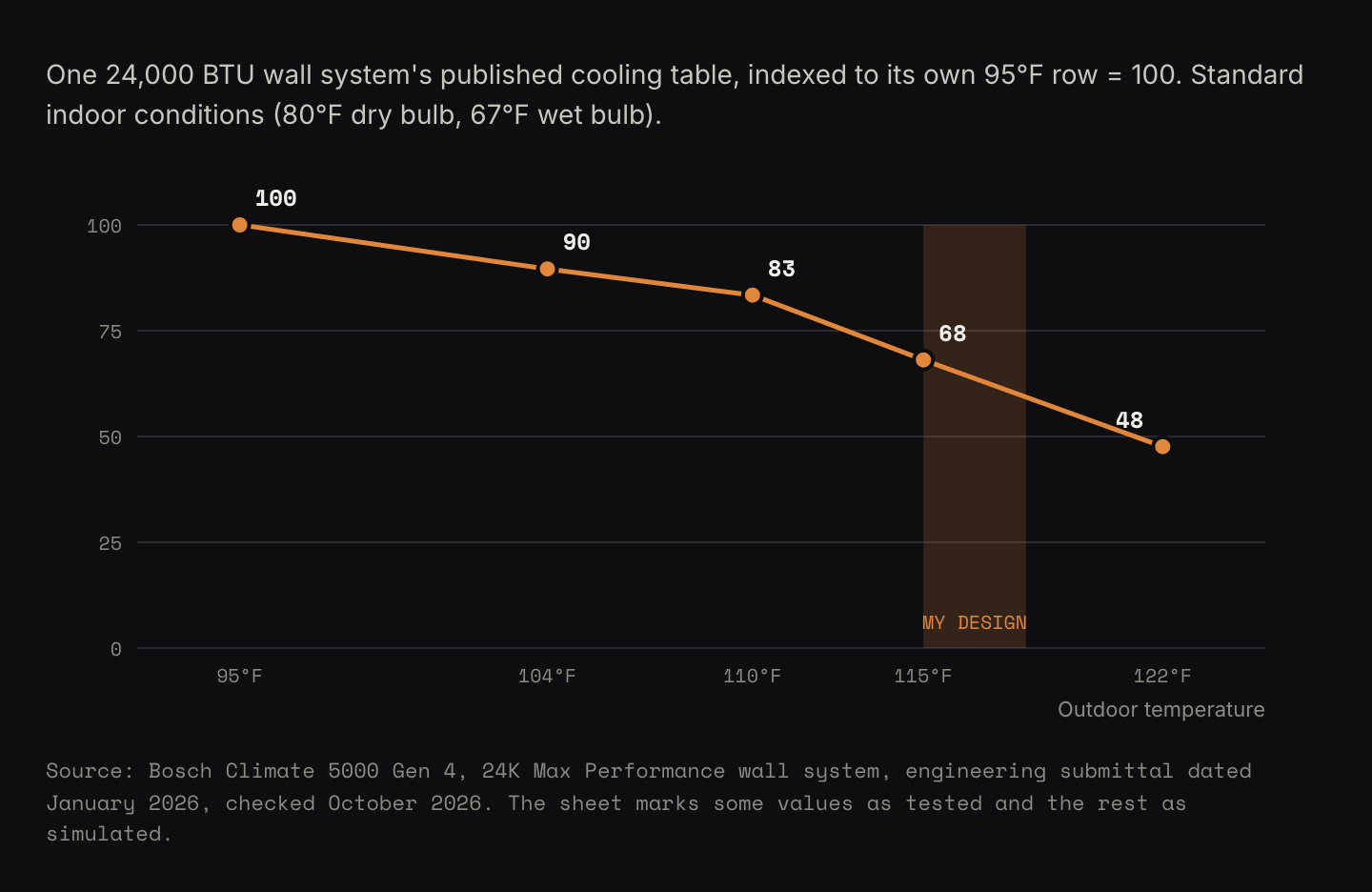
Re-checking the sheets in October 2026, I found one that does publish it. Bosch's submittal for that 24,000 BTU wall system has a cooling table out to 122°F. Indexed to its own 95°F row, at standard indoor conditions, capacity is about 90 percent at 104°F, 83 percent at 110°F, 68 percent at 115°F and 48 percent at 122°F. The sheet marks some values as tested and says the rest are simulated, so treat the numbers as approximate.
At the top of its rated range, that unit is doing about half the cooling it does at 95°F.
The parts that were not magic
- I carried one number too far. The 129°F came from a single secondary source and made it into a summary before I checked it.
- I wrote that no manufacturer published high-temperature capacity. At least one sheet did, and it was dated before I wrote that.
If you are about to try this
- Read the sheet for the exact outdoor model and refrigerant.
- Trace any standout number to the manufacturer before it goes into your summary.
- Look for a cooling performance table by outdoor temperature.
- Compare sizes using the rated cooling capacity at 95°F from the sheet.
Build it yourself
What it does: a one-page shortlist of mini-splits that are rated to run on your hottest day. The pieces:
- A temperature sensor near where the outdoor unit would sit, logging through a summer.
- The manufacturer submittal for each candidate's exact indoor and outdoor model numbers.
- A comparison table: model, refrigerant, rated cooling range, rated cooling capacity at 95°F, and capacity at your design temperature if the sheet publishes it.
- A pass/fail line at your design temperature plus some margin. Everything below the line drops out before you compare anything else.
If you have found a high-temperature capacity table for another brand, I would like to see it.