
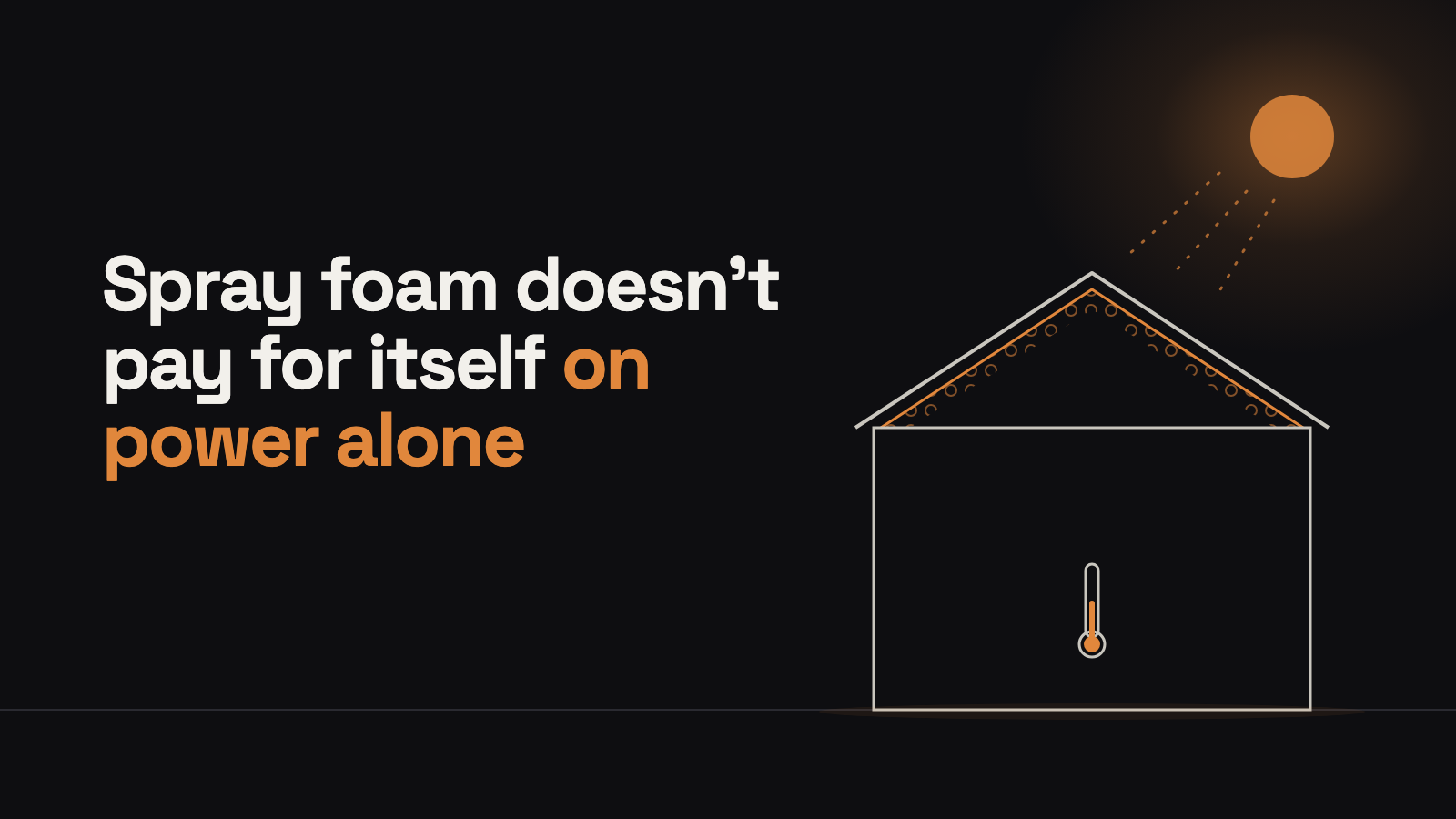
On electricity alone, my model put the payback on the spray foam in my garage at 15 to 30 years. I ran that math first and bought it anyway.
A desert garage is its own climate
The garage is a two-car space in Arizona. Before August 2026 the outside walls were hollow cavities, the vented attic had no insulation, and the roll-up door had none either. A sensor out there peaked at about 119°F that summer. It barely cooled off at night. On a typical July day it bottomed out around 84°F before dawn and climbed to about 108°F by early afternoon.
The plan was for that room to hold seed trays and a 3D printer. Heat is bad for both. The heat also changed how I shopped for cooling.
The heat sets the size
A mini-split was the obvious unit, but the spec sheet line that mattered first was not efficiency. It was the maximum outdoor temperature the unit is rated to cool at. Some of the best-known brands top out at about 115°F. My design condition was 115 to 118°F at the condenser. A unit that hits its limit on the worst day of the year quits on exactly the day you need it. I only shortlisted units rated to 120°F or more.
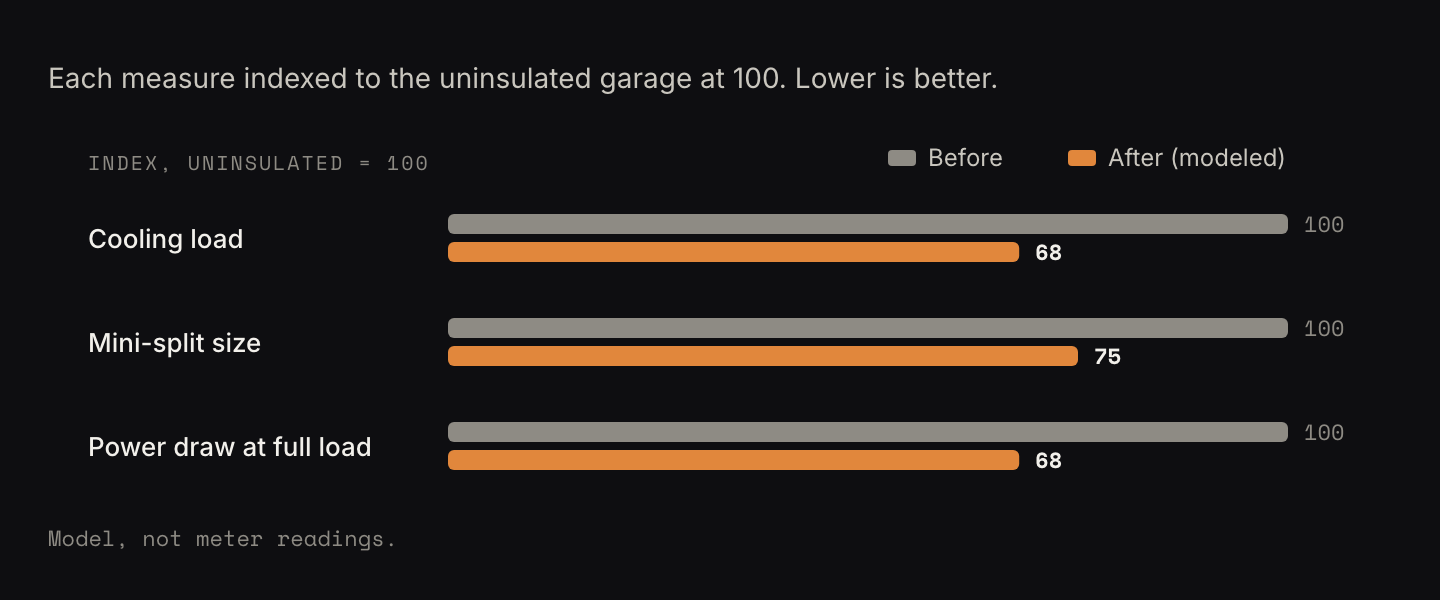
Sizing had the same problem. A rule-of-thumb load for an uninsulated hot garage came out around 17,600 BTU, and the temperature gap I was asking the unit to hold was about 40°F, roughly twice a normal cooling design. My estimate was that an 18,000 BTU nameplate would deliver something like 14,000 to 15,000 on a peak day, which is short of the load. Uninsulated, the answer was 24,000 BTU.
Insulation changes that. With the attic and door insulated and the leaks sealed, the model put the load at 11,000 to 13,000 BTU, a 30 to 40 percent cut.
Why the payback math says no
On electricity alone the model put payback at 15 to 30 years, and about 10 in the most optimistic case. My own research recommended something else: blown-in insulation on the flat garage ceiling, an insulation kit on the door, and careful air sealing. That path would get about 80 percent of the benefit for about a quarter of the cost, and pay back in 3 to 6 years.
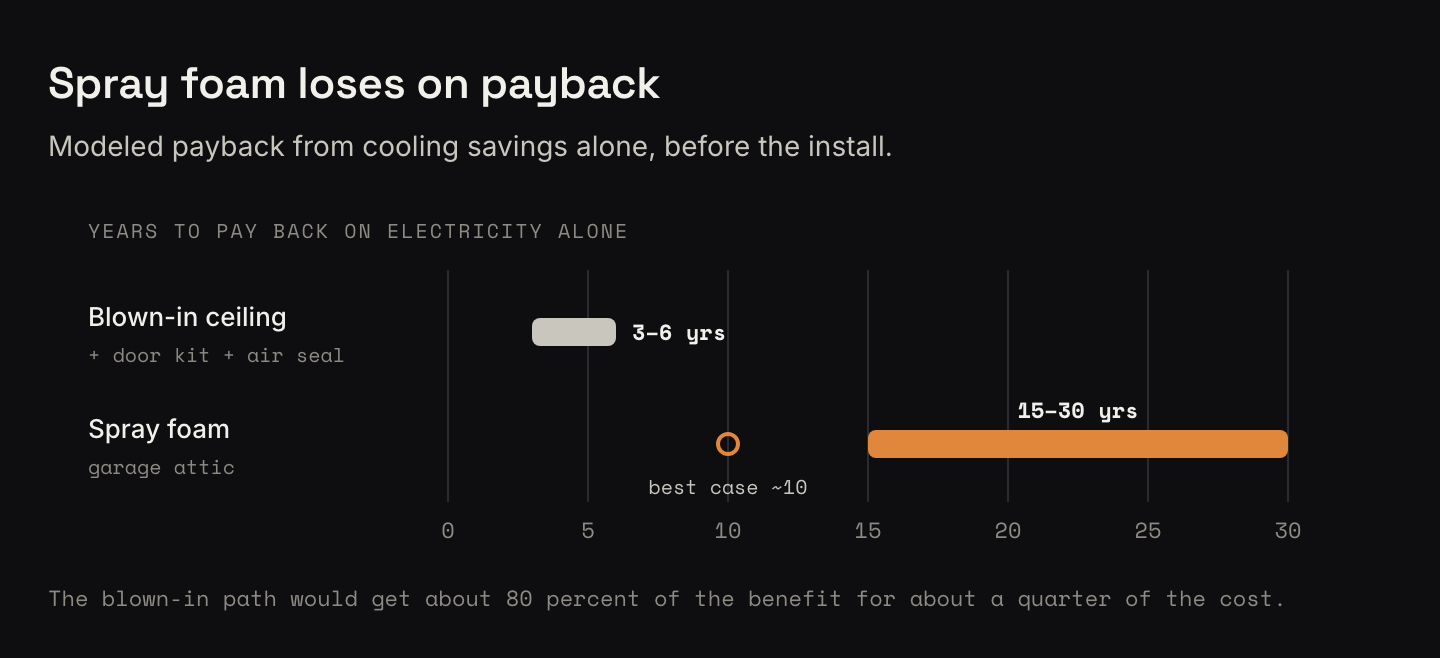
If the only question is whether it pays for itself, the blown-in path wins and it isn't close.
Foam versus blown-in
- Foam is the air seal. To match foam you have to seal every top plate, penetration and hatch separately.
- Garage wall space is valuable, so I was looking at a ducted unit with its air handler up in the attic, venting down through the ceiling. A foamed attic is a much better home for equipment than a vented one that runs around 150°F.
On August 18, 2026, in one day, the garage got a nominal six inches of open-cell foam under the roof, the three hollow exterior walls drilled and filled, and an insulation kit on the door. The fourth wall faces the house and was already insulated.
Open cell foam
Closed-cell foam sounds like the premium choice, and in some climates it is. In a hot, dry climate open cell is the standard at the roofline. Closed cell's vapor barrier isn't needed here, and because it is waterproof it can hide a roof leak. It also costs about 4.8 times as much per board foot.
Six inches of open cell is roughly R-21 to R-25.
The parts that were not magic
- Every ratio here is a model. The cooling unit is its own decision, separate from the insulation, so none of this is a meter reading.
- My floor area was wrong. An early note had the garage about 18 percent bigger than the plan, and the load model was built on the bigger number.
If you are about to try this
- Check the maximum cooling temperature before efficiency. In a desert garage a unit that shuts off at 115°F is the wrong unit, whatever its rating.
- Insulate before you size the unit. The insulation decides whether you need the bigger unit, so buying the unit first locks in the larger size.
- Run the payback, then list what it leaves out. If the list matters to you, the payback answer isn't the whole decision.
- Measure from the plan. A load model is only as good as the square footage you feed it.
Build it yourself
The pieces:
- A temperature sensor in the garage for a summer, so the load is based on your real peaks and overnight lows.
- A load estimate from floor area and temperature gap, with extra margin for very high outdoor temperatures.
- Two insulation options priced side by side: blown-in on the ceiling plus door kit and air sealing, and spray foam at the roofline plus walls and door.
- A mini-split rated to cool at or above your hottest outdoor temperature, sized after the insulation.
The research and the model took a couple of weeks.
If you have insulated a garage in serious heat and measured what changed, I would like to hear how it went.